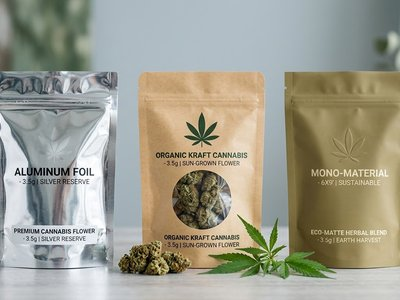
Compare OTR, light block and recyclability of PET/AL/PE, PET/EVOH and mono-material films for cannabis flower, with ASTM test data and a selection matrix.
A failed shelf-life test is the most expensive sheet of paper in the cannabis supply chain. The flower was cured right. The humidity packs were fresh. But the packaging let oxygen in, and the batch came back with faded aroma and degraded THC numbers.
We see this failure more often than you would expect — and in most cases, the root cause was decided months earlier, when someone picked a barrier structure from a catalog without asking what the flower actually needed.
In 2026, three structures dominate the cannabis flower shelf: PET/AL/PE foil laminates, PET/EVOH high-barrier films, and emerging mono-material PE films. They are not interchangeable.
There is no best structure. There is only the right structure for a specific product, shelf-life target, and brand position. This article breaks down the trade-offs and ends with a decision framework you can take straight into your next RFQ.
The Three Structures, Decoded
Start with what each structure actually is. Barrier films are laminates — each layer has one job.
PET/AL/PE — the foil workhorse
This structure stacks three layers. PET, usually 12 μm, carries the print and gives the film its tensile strength. The aluminum foil layer, 6–7 μm, does the heavy lifting: it blocks essentially all oxygen, moisture, and light. The PE layer on the inside provides the heat seal.
This is the structure you choose when shelf life is non-negotiable. Its job is to make the inside environment almost independent of the outside one.
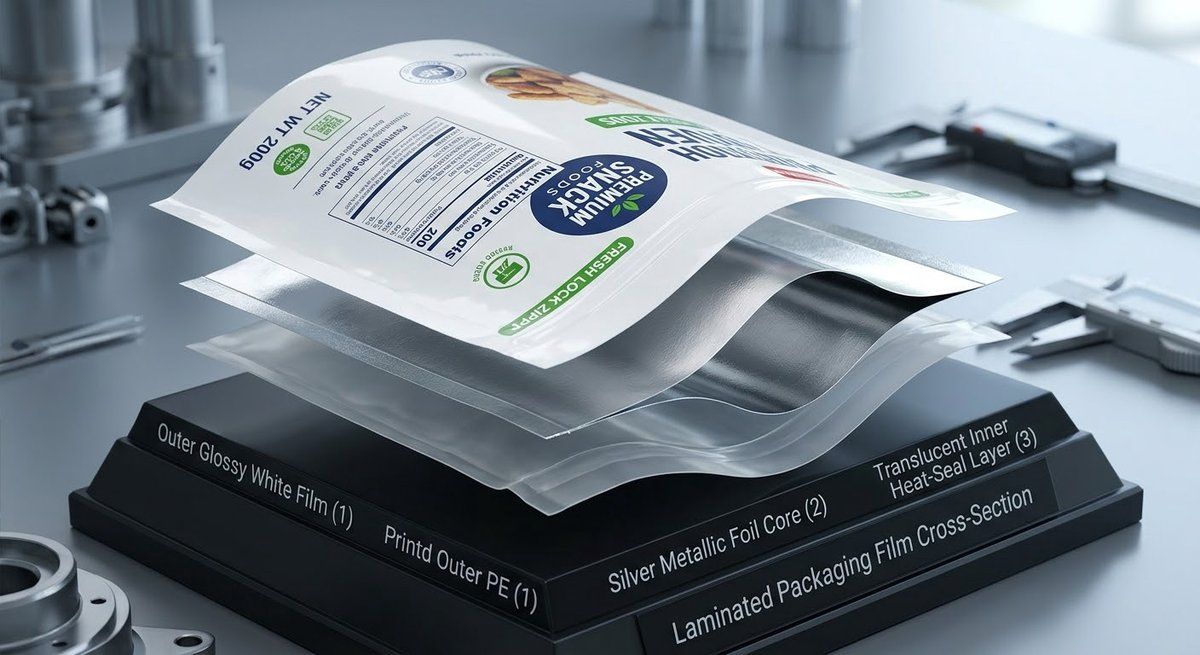
PET/EVOH (and PET/MET/PE) — the transparent-barrier contender
EVOH films replace the foil with a 3–5 μm ethylene-vinyl alcohol barrier layer. OTR performance is excellent for a transparent film — with one catch: EVOH loses barrier efficiency as humidity rises, so it must be sandwiched between protective layers, typically PET outside and PE inside.
Metallized PET (PET/MET/PE) sits between the two: a better barrier than clear EVOH laminates, a premium metallic look, but no true transparent window.
Mono-material PE/PE — the recyclability play
Mono-material films build the whole laminate from one polymer family — PE with PE, or PET with PET — usually exceeding 90% single-polymer content. That composition is what makes them compatible with store drop-off recycling streams.
The trade-off is barrier performance — sometimes a lot of it. Without foil or a robust EVOH core, oxygen protection depends on barrier coatings or thin tie layers, and it rarely reaches foil-grade levels.
Performance Head-to-Head: Oxygen, Light, and Moisture
Oxygen transmission (OTR) and terpene preservation
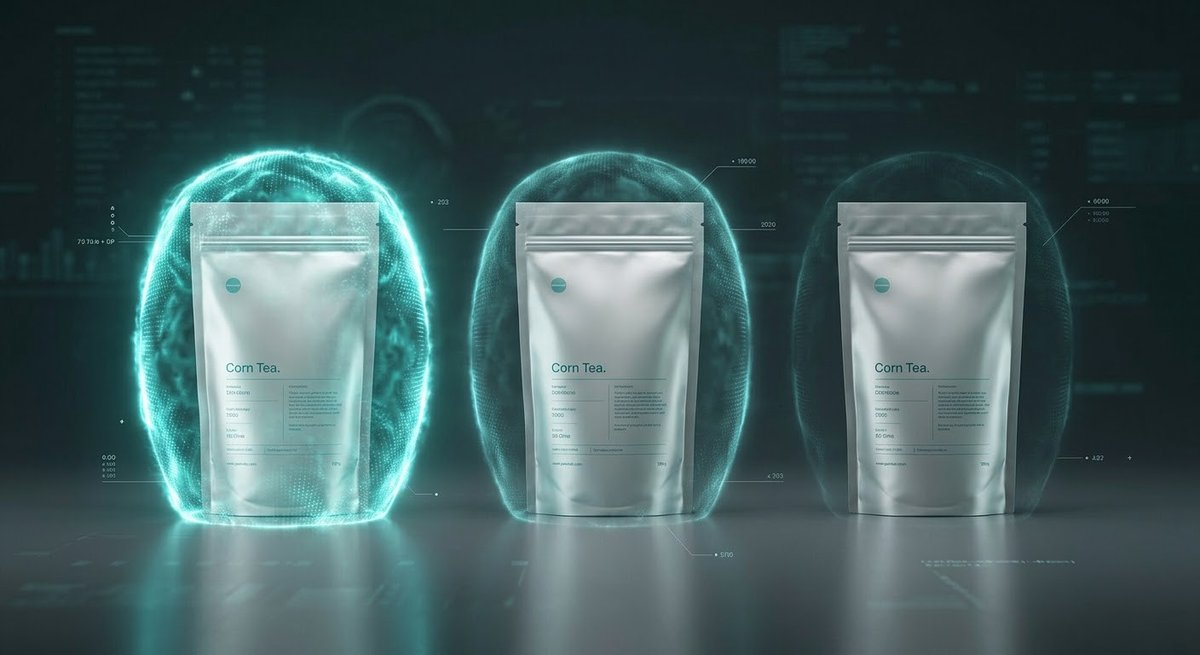
OTR is measured under ASTM D3985, and the numbers separate the three structures cleanly. Foil laminates typically measure at or below 0.05 cc/m²/day. High-barrier PET/EVOH laminates usually land between 0.5 and 2. Mono-material films range widely, from roughly 3 to 15, depending on coatings and gauge.
Ranges vary with gauge, supplier, and test humidity — treat any single number as a starting point for an RFQ, not a guarantee.
For a 12-month shelf-life target, most operators aim for an OTR below 1 — the range where terpene loss and THC degradation slow to commercially acceptable rates over a full year. That target immediately rules out most mono-material designs for long-hold flower, no matter how strong the sustainability story sounds.
Light exposure — the foil advantage
Light is the forgotten barrier dimension. THC and terpenes photodegrade under UV and visible light. An aluminum foil layer blocks essentially all of it. Transparent EVOH structures transmit nearly everything, and metallized films sit in between.
If your product sits under dispensary display lighting for weeks, transparent barrier films need help: UV-blocking coatings, amber tints, or secondary packaging.
Moisture and the 58–62% RH window
Cured flower wants a relative humidity between 58% and 62%. Water vapor transmission, measured under ASTM F1249, determines how hard the structure works to hold that window.
Foil laminates transmit almost no moisture — the humidity pack does the regulating and lasts the full run. Mono-material films breathe more, which shortens humidity-pack life and lets flower dry out faster in dry climates. PET/EVOH performs well in between, as long as the EVOH layer stays dry.
The Sustainability Equation: Recyclability vs Regulation
Where mono-material wins — and where it gets complicated
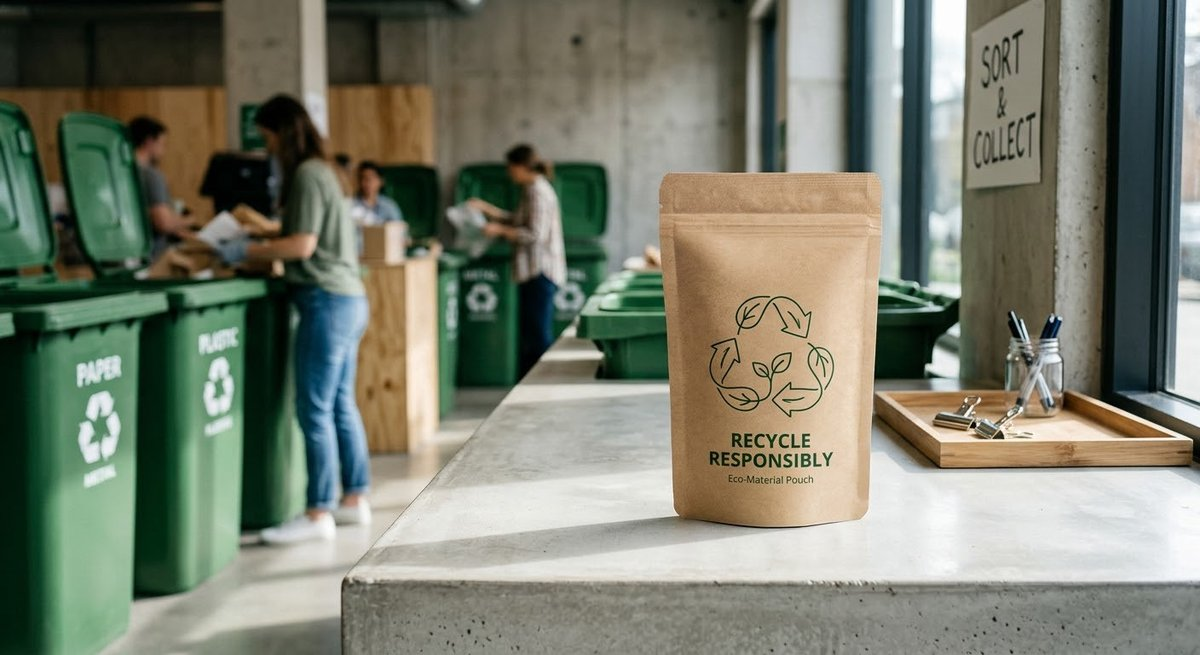
Mono-material films earn their store drop-off compatibility from composition rules, not marketing. The Association of Plastic Recyclers (APR) Design Guide treats a PE film as recyclable when barriers, coatings, and tie layers stay within tight thresholds — EVOH content below roughly 5% is a common benchmark. Add an aluminum layer or heavy metallization and that compatibility disappears.
How2Recycle labels make the difference visible to consumers. A store drop-off label is only credible when the structure qualifies — which is exactly why mono-material has become the default for sustainability-led brands.
2026 state-level EPR pressure
California's SB 54 raises the stakes beyond labels. The law requires producers of plastic packaging to fund a recycling system and drives toward a 65% recycling-rate target, with eco-modulated fees that charge more for hard-to-recycle formats. Similar programs are advancing in other states. For multi-layer foil laminates, that fee exposure keeps climbing; for qualifying mono-material films, it does not.
The honest gap
Here is what rarely makes it into a sustainability pitch: cannabis packaging frequently bypasses curbside recycling regardless of structure. Child-resistant components, mixed materials in one package, and product residue all complicate sorting.
Choosing a mono-material film improves the odds, but no structure guarantees real-world recycling today. Be careful about putting a stronger claim than that on a label.
Cost and Supply Chain Realities
Price drivers: layer count, lamination, MOQ and tooling
Foil laminates cost more per square meter — the foil adds material cost and an extra lamination step, and aluminum pricing moves with the metals market. EVOH and metallized structures cost less. Mono-material films are becoming cheaper as capacity grows.
Process choice matters too. Solvent-free lamination suits long runs and carries lower per-unit cost; dry lamination handles more material combinations but costs more and adds drying time.
Lead time and MOQ differences
Foil structures have the deepest supplier pool, but customized orders usually come with higher minimums plus tooling or cylinder charges. Mono-material films have fewer qualified suppliers, and lead times for complex printed structures can run longer — though capacity is expanding quickly through 2026.
Hidden costs: the expensive tail of a "cheap" structure
The cheapest film is not always the cheapest decision. A structure that fails a shelf-life claim triggers batch losses, refunds, and reprints. A structure that misses a state labeling rule triggers compliance re-prints across the whole SKU line.
Budget for the failure case, not just the unit price. When you compare quotes, ask what a reprint of your minimum run would cost — not just what the first run costs.
The Decision Framework: Match Structure to Positioning
Decision matrix
| Structure | OTR (cc/m²/day) | Light block | Recyclability | Relative cost | Best for |
|---|---|---|---|---|---|
| PET/AL/PE | ≈0.05 or lower | Full | Low | $$$ | Premium flower, 12+ month shelf life |
| PET/EVOH / PET/MET/PE | 0.5–2 | None / partial | Low–medium | $$ | Mid-tier lines, visible product |
| Mono-material PE/PE | 3–15 | None | High (store drop-off) | $$ | Sustainability-led brands, fast turnover |
Three worked examples
Premium indoor flower, 12-month shelf life. Choose PET/AL/PE. The foil blocks oxygen, light, and moisture in one layer, and humidity packs last the full run. The recyclability gap is real — offset it elsewhere in the brand's packaging system instead of risking the product.
Mid-tier line meant to show the product. Choose PET/EVOH with a window, or PET/MET/PE for a metallic look. Accept a shorter shelf-life target and verify OTR at your real storage conditions, not only at standard lab conditions.
DTC brand with a sustainability-first story. Choose mono-material PE/PE — and design the business model around it: fast turnover, smaller runs, fresher product. The structure only works when the product does not need to sit for a year.
Questions to ask your supplier before committing
"What are the measured OTR and WVTR values, and under which test conditions?" — insist on ASTM D3985 / F1249 test reports, not datasheet ranges.
"What is the exact layer structure and lamination process?" — you need this for compliance documentation and future troubleshooting.
"What documentation supports the recyclability claim?" — a How2Recycle evaluation or an APR compatibility review, not a verbal assurance.
Conclusion
The barrier structure you choose is a product-positioning decision, not just a materials decision. Foil protects the longest; EVOH balances visibility and protection; mono-material buys a credible sustainability story at a measurable barrier cost.
Before you sample anything, get the test reports. Before you commit a run, match the structure to how long the product actually needs to last. If you want a second opinion on an RFQ, the Lekas team reviews barrier structures for cannabis flower packaging — bring your shelf-life target, and we will tell you which structure meets it.